
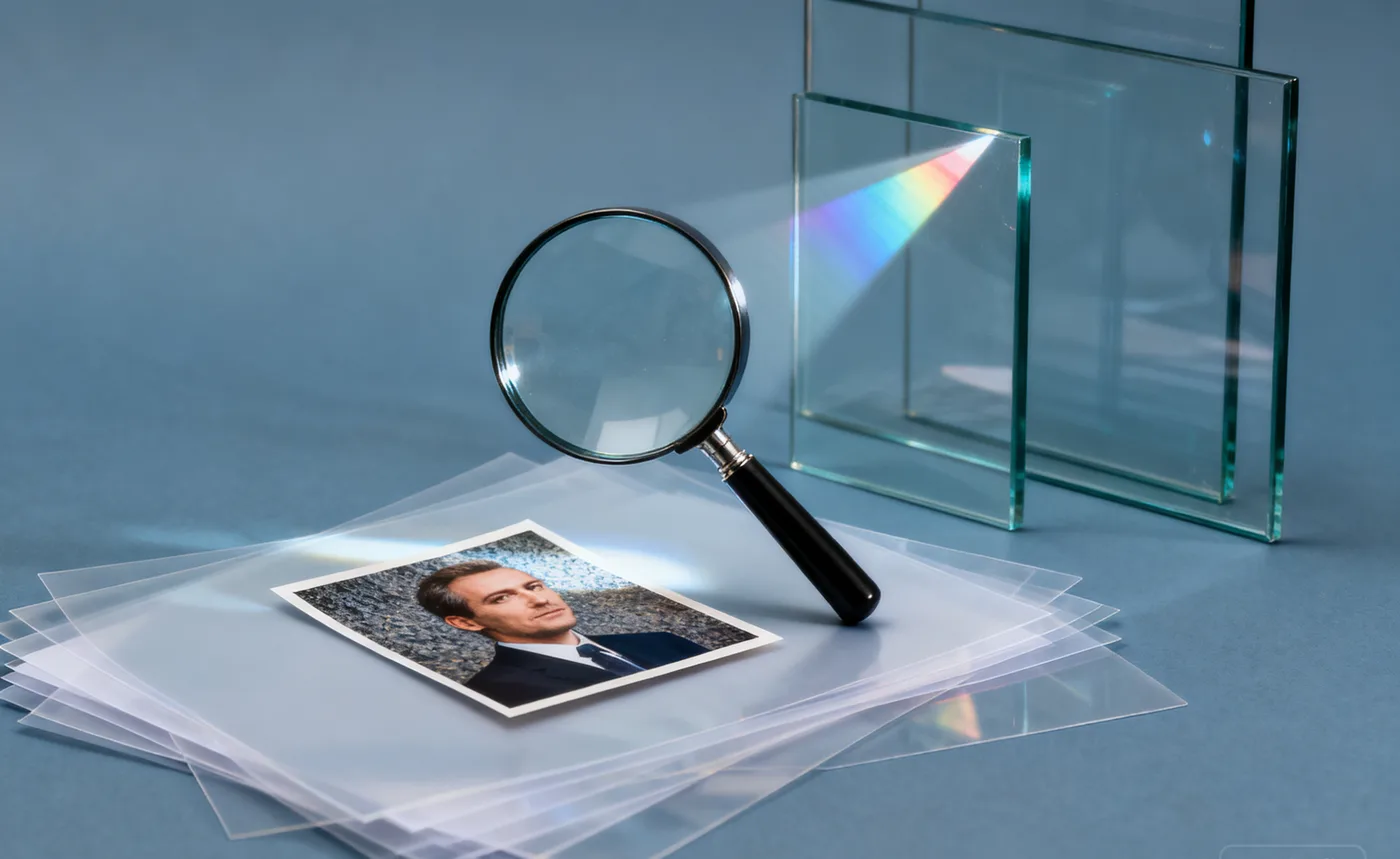
Deepfake vs AI-generated image: what is actually different
These two labels get used as if they mean the same thing. They do not, and the deepfake vs ai generated image distinction matters when you are deciding how much weight to put on a detection score.
A deepfake is a specific technique. An AI-generated image is a broader category. Roughly, all deepfakes are generated or manipulated, but most generated images are not deepfakes.
What makes something a deepfake
A deepfake swaps or synthesizes a specific person's likeness using a trained model. The defining feature is that it targets an identifiable individual and attempts to preserve their identity convincingly. Most deepfakes are video, some are images, and the technique is defined by the intent to depict a real person doing something they did not do.
The practical consequence: deepfakes usually preserve a face well and fail elsewhere. Background geometry, lighting consistency, and fine detail around the edges of the face are where they break.
What AI-generated means
An AI-generated image was produced by a generative model, either entirely from a prompt or by substantially repainting an existing image. There may be no specific person involved. A landscape, a product shot, a news scene, or an abstract illustration can all be AI-generated without being a deepfake.
The practical consequence: the failure modes are broader and less predictable. Hands, text, repeated structures, and physical plausibility are common weak points, but a careful generation can avoid all of them.
Why the distinction changes your check
If you suspect a deepfake, the most informative checks are identity-focused. Does the face match other verified images of that person under the same lighting? Are the facial boundaries consistent with the rest of the image? Is there a provenance record attached to this specific file?
If you suspect a general AI-generated image, identity checks are beside the point. The image may contain no identifiable person at all. You need scene-level checks instead: physical plausibility, consistency of light direction, repeated patterns, and whether any provenance layer survives.
Running face-focused analysis on a synthetic landscape produces nothing useful. Running scene analysis on a carefully made deepfake can miss the actual manipulation.

Detection scores treat them differently
Detectors trained on generated-image datasets often perform unevenly on deepfakes, and vice versa. The statistics differ. A model tuned to spot diffusion artifacts may be insensitive to the blending seams that characterize face swaps.
This is one reason a single score is unreliable. Two detectors trained on different data can disagree sharply on the same file, and sometimes that disagreement is telling you which category the image belongs to. Our methodology explains how we handle that.
What neither label tells you
Neither label tells you whether the depicted event happened. A deepfake of a real person in a real location is still fabricated. A generated image of a fictional scene harms nobody when it is labeled as illustration.
The question worth answering is not "is this a deepfake" but "what is this file, what has it been through, and what can I actually establish". That framing survives contact with new generation methods.
Where provenance is absent and no original exists, the honest position is that the question is unresolved and should be escalated to human review rather than settled by a score. That absence is not proof of manipulation, and a clean result is not proof of authenticity. Sample reports show how that gets written up when the signals conflict.
If you need to establish what a specific file is, start a free review and read the provenance and detector layers together rather than trusting either alone.